

Here Are 6 Warnings To Louisiana From Cities That Have Data Centers
Louisiana elected officials seem to be in love with AI Data Centers...or as some are now calling them "mass surveillance centers". We'll get to the distinction in a minute. But let's review what is happening in Shreveport and Bossier City specifically.
There are at least three large data centers coming to the area. These massive data centers have already made a lot of promises, and warnings. There have been promises about where their power will come from, and how many jobs they will 'support', but those have also come with warnings about how much city water they're going to be using every day. Which is millions of gallons of water.
What we've learned about data centers from the communities that have already been invaded...is that most of what people are promised isn't exactly true. The things that do come true seem to come at a price. Like that old 'Cursed Monkey's Paw' story, the wish comes true, but at a cost.
Sure, these massive corporations are going to 'invest $12 million into the local area' or something along those lines...but what does that mean? They're not cutting a $12 million check to a Louisiana city, they're just spending the money. But we don't know what they're getting for that (insert imaginary money here) investment. If they invest $10 million in an area, are they going to get $30 million worth of municipal assets? Are we giving up a 3-to-1 ratio just to claim a win?
Back to the places that already have data centers, that's where the truth is. Because we can hear promises all day at press conferences and events with confetti and flashing lights, but the people who live next to them literally know what they are.
Would you believe they salesman, or they guy that's been driving the car for a year?
Here are the 6 things we've learned from the people actually dealing with data centers in their communities:
1. Electric Bills: While elected officials, power companies, and AI companies continue to tell everyone that their electric bills won't go up when they're pushing through data center approvals, that might all be untrue. In fact, people who live in areas where data centers have been built (after being told the same things about bills not going up) have seen their power bills increase 50% or more in the first year of the data center operation. In states like Illinois, their power company CyrusOne even admitted the issue AFTER the data centers were forced through...
2. Noise: Residents who live in neighborhoods near existing data centers regularly record droning sounds that reach 70 decibels, 24 hours a day. For a frame of reference, 70 decibels is the sound of a vacuum cleaner. That level of sound can be heard miles away from data centers, at every hour of the day...even overnight when most people are trying to sleep.
Exposure to this level of sound can cause long term health issues.

3. EMF Exposure: Electromagnetic fields (EMFs) are something we all have to deal with every day. We're not talking about naturally occurring EMFs that are unpolarized, these are artificial EMFs that are polarized, and bring health consequences. Data centers produce heavy, constant, powerful EMFs, the type linked by long term science to childhood leukemia, breast cancer, miscarriages, brain cancers, and cognitive decline.
4. Water Waste: Just like nuclear power plants, data centers use water to cool their systems. The planned Shreveport data center is set to use 7.5 million gallons of city water per day...at the minimum. During hotter summer days, that number could climb. In Bossier City, they plan to supply 13.5 million gallons of water to data centers per day. For another frame of reference, a city of roughly 100,000 people uses about 10 million gallons of water per day. So between Shreveport and Bossier, they will be supplying a couple of large cities worth of water per day, in addition to their normal daily needs.

5. So...Jobs, Right?: All of this investment from tax payers will be returned with thousands of high paying jobs coming to their cities, right? Even the ultra-corporate friendly Wall Street Journal has labeled the job creation promise of data centers as a 'bust'. These data centers will offer approximately one job per 1,000 square feet, full time. Now, you will see phrases like "will support X number of jobs" attached to these data centers...but that will mostly be during construction. After the walls are up and wires are run, the buildings will have roughly 100 people needed to operate them.
6. What Kind Of Data?: This is becoming increasingly more obvious to those who are following data center developments. Why do we need all of these new mega-data centers to make fake videos and animate family photos? We do all of that now without 500,000 city-sized data farms. So what is going to be different?
Tech experts believe that we're watching an AI police state being built...and we're all paying for it.
More and more Americans are waking up to the spread of AI facial recognition cameras, like Flock cameras, in their communities. You can see city council meetings across the US as people learn more about this technology, where the public almost unanimously voices opposition to being tracked and profiled by the AI technology. Elected officials have been pushing back hard, so hard it would seem like they're about to lose a paying job if the AI tracking tech contract was dropped.
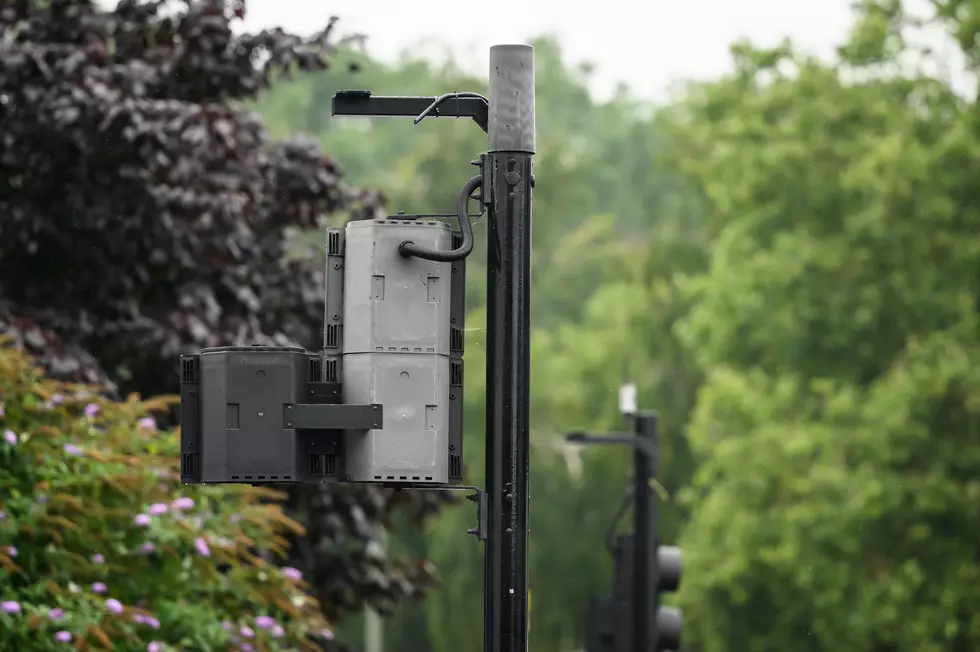
If these companies wanted to increase their ability to track your face, match it to your movement, get it attached to your banking information, put in your medical records, and see all of your texts/direct messages...they are going to need some more power. If they want to build a profile on every American who's face they scan, they're going to need a lot of infrastructure...like large data centers all over the country.
This could go beyond 'government overreach' (because that's basically where we are now, they're collecting your face and tracking you without thinking of the Fourth Amendment at all) and could become a serious concern about private companies. If companies like OpenAI, Amazon, or Google decided they wanted to become judge, jury, and executioner...they'd have everything they need. They have your face, your banking, your car (with that awesome new required kill switch that they can likely access), your medical records, and every conversation you've ever had through electronic messages. They could decide to shut off your banking, shut off your car, cut off your contact to anyone through your phone, and isolate you in every way possible.
Imagine missing your Amazon card payment and having your whole life shut down by the company. After you paid to build the infrastructure they used to be able to do it.
Top 50 Highest Paid Caddo Parish Government Employees
10 Biggest Data Centers in Illinois
Gallery Credit: Google Maps Street View